AI has redefined what search visibility means. From Google’s AI Overviews to ChatGPT and Perplexity, succeeding in the AI era depends on how well your website communicates with both traditional search engine bots and AI crawlers.
That’s why AI optimization is essential. It combines classic technical SEO with AI-specific strategies to ensure your content is discovered, understood, and cited across AI search platforms.
As AI search and LLM-based systems evolve, they rely on more sophisticated ranking signals. To optimize your website for AI, focus on technical SEO practices such as improving site performance, implementing structured data, ensuring semantic clarity, and handling dynamic rendering correctly.
In this guide, we’ll show you how to optimize your website for AI—going beyond basic indexing to strengthen technical SEO performance, boost your visibility in AI-driven search, and increase your chances of ranking across both generative AI search and traditional search engines.
5 Technical SEO Tactics to Optimize Your Website for AI Search
1. Schema Markups and Structured Data for Better AI SEO Results
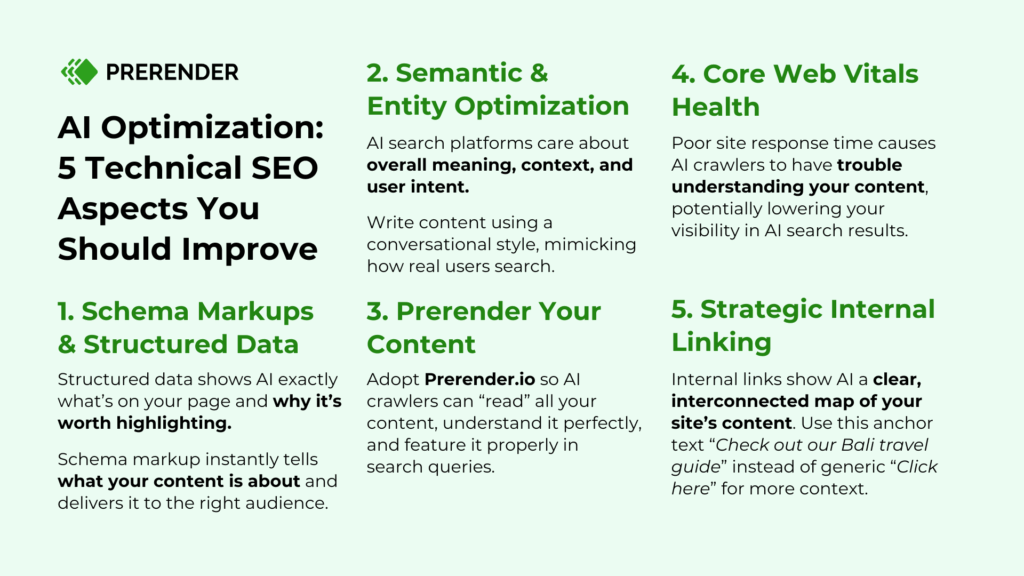
Structured data is no longer optional for AI optimization. It’s the foundation of technical AI SEO, giving both Google and AI crawlers a precise map of your content. While many marketers see schema as a “nice-to-have,” for AI SEO, it’s a must-have. Schema markup tells AI what your page is about, helping it connect your content to verified entities and display it confidently in AI-generated answers.
You might’ve heard the term “entity-based SEO.” In simple terms, entities are the people, places, and things your website covers. Structured data helps clarify these relationships, so use schemas that align with your niche:
- Travel sites: use
TouristAttractionorTripschema to connect destinations and locations. - Recipe blogs: use
Recipeschema for prep time, ingredients, and nutrition facts. - Articles: use
Articleschema to show that your content is authoritative and editorially credible.
With this kind of schema markup, AI doesn’t have to guess; it can instantly tell what your content is about and deliver it to the right audience. The end result? Greater authority, clearer context, and a higher chance of showing up in everything from straightforward search listings to AI-curated recommendations.
Read: Structured Data in SEO: What It Is, How It Works, and Examples
| Pro tip: for even stronger AI SEO optimization, align your structured data with Knowledge Graph entities on sources like Wikidata or Schema.org. This adds semantic trust and improves your content’s chances of appearing in AI Overviews and LLM-generated summaries. |
2. Entity Optimization and Semantic SEO Implementation
Traditional SEO focuses on matching keywords. AI SEO focuses on understanding meaning. Semantic SEO helps AI systems recognize the relationships between people, places, and things, known as entities, rather than just keyword strings.
This is perhaps one of the biggest differences between traditional and AI-based search engines: AI doesn’t just search for keywords on your website anymore. As a result, your SEO approach must focus on helping AI understand both your message and its intent.
If someone asks an AI chatbot, “What’s the best tropical destination in Indonesia?” the system will connect “tropical destination” and “Indonesia” to interpret that Bali might be the perfect fit, even if the content doesn’t explicitly mention that exact phrase.
One of the best ways to show AI that your site is an authority on a topic is by creating content hubs around main ideas or entities. For instance, if your focus is on Bali travel, you might have a thorough “Bali Travel Guide” page that links to in-depth articles on beaches, local foods, festivals, and more.
This helps the generative AI platforms recognize that you’re covering the topic comprehensively. Plus, it makes it easier for human readers to find what they need without bouncing around your site.
| Pro tip: write in a conversational style to improve your chances of being indexed on AI searches. Since AI learns from how real people talk, ask questions, and seek information, it’s important to address common queries directly and organize your content into clear sections. |
Read: Product Discovery: How Do LLMs Decide What Content to Recommend?
3. Prerender JS Content with Prerender.io for Improved AI Crawling and Indexing
AI crawlers and JavaScript rarely get along. Most AI bots (like GPTBot or ClaudeBot) can’t execute JavaScript at all, meaning your best content might be invisible to AI search if you rely on client-side rendering.
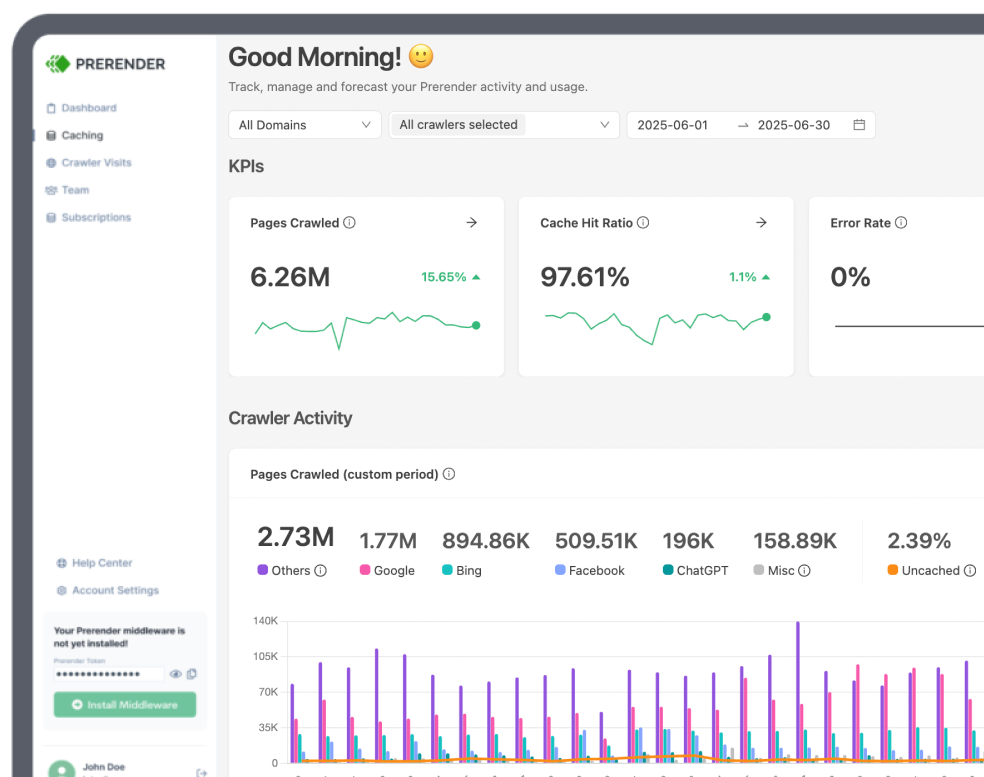
That’s where Prerender.io comes in, helping you optimize your website for AI search. Prerender.io renders your JavaScript content server-side, producing clean, indexable HTML versions that both Google and AI crawlers can read instantly. This makes Prerender.io one of the best tools for AI SEO optimization, bridging the gap between technical SEO and AI visibility.
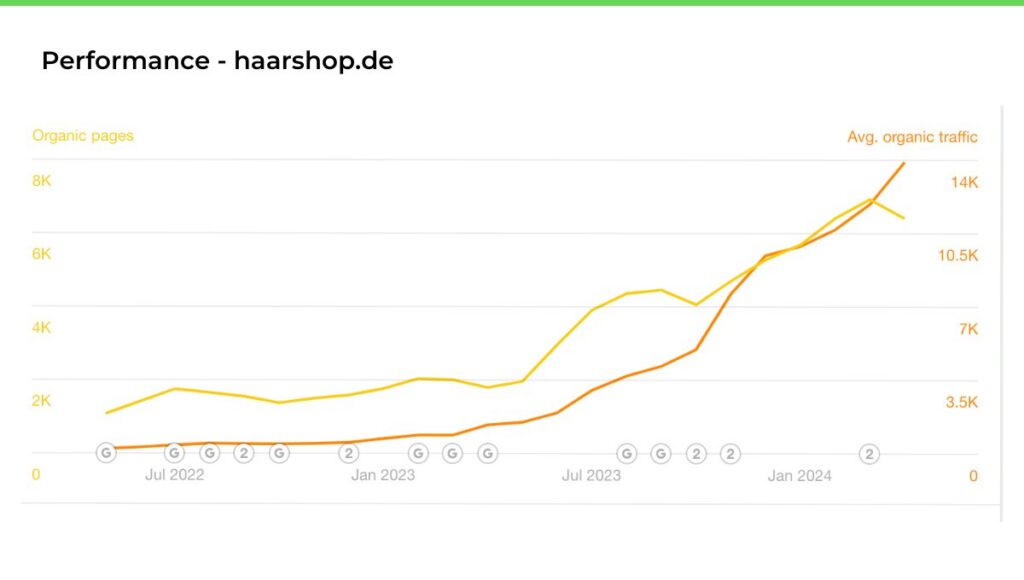
Additionally, Prerender.io can help speed up page load times for bots, minimizing the risk of timeouts or partially indexed content. See for yourself how Haarshop got a page speed score of 99 and a 50% traffic increase after Prerender.io adoption. Read the case study here.
Want a full breakdown of how AI search engines crawl and reuse content? Read our AI Visibility Playbook.
4. Core Web Vitals and Website Performance for Healthier AI SEO
AI search engines value fast, stable pages as much as Google does. A poorly performing site signals low quality to human users and AI models.
Generative AI platforms process and deliver content in a fraction of a second. Suppose your site runs slowly or your pages are poorly structured. In that case, it’s not just your human users who will be frustrated—AI crawlers will also have trouble understanding your content, potentially lowering your visibility in AI search results.
Core Web Vitals remain a key metric in the AI era because they directly measure how quickly a page loads, how soon it becomes interactive, and whether it stays visually stable. Even for AI crawlers that don’t physically click buttons, real user data about interaction and stability gets factored into AI models, influencing how your site is perceived and ranked.
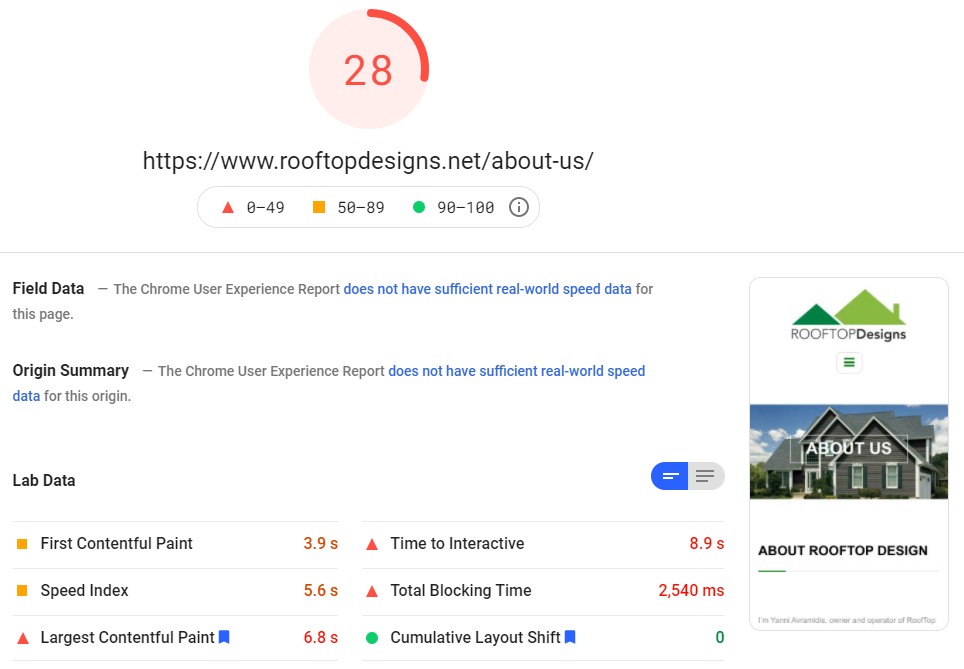
Improving your Core Web Vitals directly improves crawlability, user trust, and your site’s AI search ranking potential. Here are some technical SEO techniques to boost your Core Web Vitals scores:
- Use fast hosting or a CDN to keep latency low.
- Convert your site’s images to more efficient formats like WebP or AVIF to trim file sizes.
- Remove or defer blocking scripts so the core content can be rendered promptly.
- Use Prerender.io to ensure everything loads fast—especially for return visits.
These tactics significantly impact how AI views your site’s performance and, by extension, improve AI visibility. They go far beyond mere page speed and can help your site handle large influxes of traffic.
Related: How Poor SEO CWVs Impact Your LLM Visibility
5. Strategic Internal Linking for Comprehensive AI Understanding
Internal links are more than a navigational aid—they form the “knowledge graph” of your own website. The better your structure, the easier it is for AI to connect context and meaning across pages. AI crawlers (and the traditional search engine crawlers like Google) love it when your pages are logically linked.
If you have a main page about “Digital Marketing”, linking to sub-pages about SEO, PPC, and Social Media Marketing, plus a link back to the main page, makes it clear how the topics interrelate. To AI crawlers (and to humans), this kind of structure paints a neat picture of how your topics and pages fit together.
When you have a proper internal linking strategy, generative AI tools will gather information from multiple parts of your site to craft a cohesive answer. The result? Your site is more likely to be quoted as an authoritative, comprehensive source—perfect for climbing the ranks in AI-powered search platforms.
| Pro tip: avoid using anchor text links like “Click here.” Instead, use descriptive phrases such as “Check out our Bali travel guide.” This helps AI better understand the link’s destination and context. Clear, descriptive anchor texts are essential for highlighting the relevance of key entities like “Bali,” improving your SEO in AI-driven searches. |
Learn more about optimizing site architecture in our guide to speeding up Google indexing.
Improving AI Visibility Starts with Optimizing Your Technical SEO
Optimizing your site for AI visibility starts with strong technical SEO. Speed, structure, and clarity matter more than ever: if AI crawlers can’t render or interpret your content, it effectively doesn’t exist.
With Prerender.io, your JavaScript pages become fully crawlable, indexable, and AI-ready, ensuring that both Googlebot and AI crawlers see your site exactly as users do.
Install Prerender.io today and start improving your AI SEO performance, from faster indexing to more consistent citations across AI-driven search platforms.
Diving into the world of SEO optimization for AI? These resources can help you:
- How to Get Your Website Featured by ChatGPT and Other AI Search Engines
- 6 Reasons Your AI Content Isn’t Being Indexed Faster
- Get Discovered: a Podcast About AI in Search From Prerender.io
FAQs About Technical SEO for AI Optimization
1. What Is AI SEO Optimization?
AI SEO optimization is the process of improving your website so it can be easily discovered, interpreted, and cited by AI search engines like ChatGPT, Gemini, and Perplexity. It combines traditional technical SEO practices, like site speed, structured data, and schema, with optimizations such as prerendering and entity-based SEO.
2. How Does Technical SEO Impact AI Visibility?
Technical SEO ensures that both Google and AI crawlers can properly access and understand your website. When your site loads quickly, uses structured data, and avoids JavaScript rendering issues, it’s more likely to be indexed accurately and featured in AI-generated results and summaries.
3. How Can I Optimize My Site for AI Search Engines?
To optimize your site for AI search engines, focus on structured data, semantic SEO, and dynamic rendering. Use tools like Prerender.io to make your JavaScript content fully crawlable, and ensure your Core Web Vitals are strong to improve performance and ranking in both traditional and AI search environments.
4. What’s the Difference Between SEO, AIO, and GEO?
SEO focuses on ranking in Google’s search results. AIO (AI Overview Optimization) ensures your content appears in Google’s AI-generated summaries, while GEO (Generative Engine Optimization) focuses on making your content visible and retrievable by AI systems like ChatGPT and Perplexity. Together, they define the future of discoverability across all search platforms. Read: SEO vs. GEO vs. AIO: Understanding the New Search Landscape.