Your site ranks in Google, and your SEO traffic looks healthy. But when someone asks ChatGPT about a problem your product solves, your name doesn’t come up.
This isn’t an AEO content quality problem. Across the thousands of JavaScript-heavy sites Prerender.io processes daily, we see the same thing: pages that look complete in a browser are functionally empty when an AI crawler requests them. OAI-SearchBot, ClaudeBot, PerplexityBot: none of them executes JavaScript. What they receive is an unreadable, empty shell of the page.
This guide covers how AI crawlers like ChatGPT’s OAI-SearchBot read your site, why JavaScript frameworks (including Lovable-built apps and other vibe-coded tools) create a visibility gap in AI search, and how to get your website indexed by ChatGPT and other AI search engines.
TL;DR: How to Make Your Site Get Indexed and Featured by ChatGPT
To get your website indexed and cited by ChatGPT and AI search engines, your content must be crawlable, fully rendered, and easy for AI crawlers to interpret and reuse. Unlike Google Search, AI platforms retrieve and synthesize content for LLM-based answers, not rankings.
Focus on:
- Allowing OAI-SearchBot in your robots.txt so ChatGPT can access your pages
- Serving clean, fully rendered HTML (especially for JavaScript-heavy sites)
- Structuring content for NLP, semantic clarity, and intent matching
- Adding schema markup to help AI systems understand page context
- Building strong topical authority, internal linking, and trustworthy content
Tools like Prerender.io help enterprise teams make complex, JavaScript-driven websites with thousands of pages readable by AI crawlers, increasing the likelihood that pages are retrieved, cited, and recommended in ChatGPT, Gemini, Claude, and other AI search experiences.
How Google and AI Search (ChatGPT) Index and Surface Content
For over 25 years, Google Search has dominated online discovery, but search behavior is changing. A study by Datos (a Semrush company) found that more than 20% of Americans are heavy users of AI search tools, and Statista predicts that 90 million U.S. adults will use generative AI as their primary search tool by 2027.
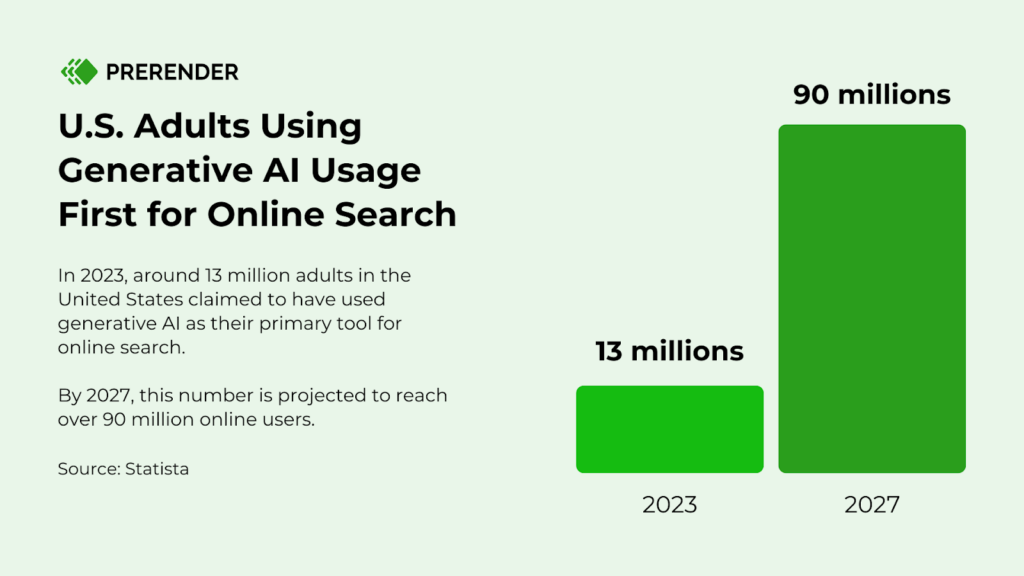
The shift isn’t just about where people search, but how search works. Google ranks pages based on keywords, backlinks, and EEAT signals, while ChatGPT and other AI search platforms focus on AI search optimization, intent understanding, and selecting content for LLM retrieval and AI citations, not ranking links.
Here’s how Google Search and ChatGPT index and surface content differently, based on what we observe across Prerender.io’s crawler traffic every day.
| Aspect | Google Search | ChatGPT & AI Search |
| How search results are surfaced | Ranks web pages in a list based on keywords, backlinks, and authority | Selects sources to synthesize answers based on intent and relevance |
| What matters most | Keyword matching, backlinks, EEAT signals, etc. | Content clarity, structure, and semantic meaning |
| JS content rendering | Can render JavaScript, but with limitations and delays | Strongly prefers clean, fully rendered HTML that can be easily read and extracted from |
| What the crawler actually receives from a JS-heavy site | Renders JavaScript with delays and coverage gaps. In practice, some content becomes visible while other content is missed, depending on crawl timing and render budget. | Receives the raw HTML shell only. We consistently observe that content injected by JavaScript after load, including client-side meta tags and structured data, is absent from the response the crawler actually processes. |
These differences between how Google and ChatGPT process content change what “visibility” means in AI search. As more users shift toward AI-driven search experiences, websites are no longer competing for rankings alone. They’re competing to be retrieved, interpreted, and cited by AI systems. Optimizing for AI search visibility is how you capture this growing audience and continue driving traffic beyond traditional search results.
The challenge now is understanding how to adapt your SEO strategy for AI search, from ChatGPT optimization and OAI-SearchBot indexing to schema optimization and EEAT-driven trust signals, so your content stays visible in a world beyond Google.
But none of those strategy changes will matter if AI crawlers cannot access your content in the first place. From our experience rendering thousands of pages per day, a customer visiting a React-built product page sees the complete experience: product title, description, pricing, reviews, images, and structured data rendered normally in the browser after JavaScript executes.
But when OAI-SearchBot requests that same URL, it often receives only the initial HTML response: a document shell with a <div id=”root”></div>, page title, empty meta tags, empty <body>, and no structured data visible. Everything else that makes the page useful to an AI system is absent.
This pattern is consistent across every AI crawler family Prerender.io identifies, because none of them executes JavaScript. Prerender.io classifies and serves cached, fully rendered HTML to six crawler families: OAI-SearchBot, ClaudeBot, Google-Extended, PerplexityBot, YouBot, and AmazonBot. On unrendered JavaScript sites, what each of these crawlers receives is the same raw document shell. Without a rendering layer delivering cached HTML, the crawler gets the pre-execution source, which contains almost none of the content, structure, or metadata these systems need to retrieve and cite a page.
For developers who have inspected view-source on a single-page application, this happens often. The difference now is that the audience reading that raw source has expanded far beyond Googlebot. Every AI search system pulling content for retrieval and citation encounters the same empty document. If your infrastructure does not serve rendered HTML to these crawlers, your pages are functionally invisible regardless of how complete they look in a browser.
Related: Get found beyond Google. Download Our Free AI Visibility Playbook
AI Content Discovery: How ChatGPT Crawlers Read and Use Your Content
Before diving into content optimization for AI crawlers like ChatGPT’s OAI-SearchBot, it’s important to understand how ChatGPT and other AI search engines discover, read, and process web content. These systems play a direct role in AI search optimization, LLM retrieval, and AI-driven content discovery—not just indexing.
As OpenAI explains:
“OpenAI uses web crawlers (‘robots’) and user agents to perform actions for its products… OAI-SearchBot is for search. OAI-SearchBot is used to surface websites in search results in ChatGPT’s search features.”
Like traditional search engine crawlers such as Googlebot, AI crawlers discover and crawl websites. The difference lies in what happens next. Googlebot builds a searchable index designed to rank pages, while ChatGPT crawlers harvest and analyze content to support LLM retrieval, RAG-based systems, and AI answer generation.
Using machine learning (ML) and natural language processing (NLP), AI crawlers interpret semantic relationships, extract key information, and evaluate how well content answers real user questions. Rather than building a ranked index of pages, the crawled content is used to train, update, and retrieve information for large language models (LLMs).
This is what enables AI search platforms like ChatGPT to generate contextual, conversational answers and decide which sources to cite when responding to user queries.
What our team sees consistently across Prerender.io’s production infrastructure: React, Angular, and increasingly Lovable-generated sites that pass every traditional SEO audit while remaining largely invisible in AI search. The metadata exists. The pages are indexed. Rankings look healthy. But the page content is injected client-side after initial load, and AI crawlers never wait for that to happen.
When an AI crawler requests the URL directly, it receives a near-empty HTML document containing a <div id=”root”></div>, placeholder meta tags, and no readable body content. The crawler never executes JavaScript or waits for the application to hydrate, so it never receives the rendered page.
If your traditional SEO appears healthy but your content is missing from AI search results, you are dealing with a rendering problem. The content may be good, but it doesn’t matter if the crawler can’t retrieve the page in a readable state.
Our advice is to fix access before you optimize. Every tactic in the optimization playbook that follows (schema markup, NLP-aligned content structure, internal linking, topical authority, EEAT signals) improves how AI systems interpret and prioritize content they can already read. Rendering determines whether the crawler receives your content at all.
So instead, we recommend considering these questions:
- Access layer: Can the crawler see your content?
- Optimization layer: Can the crawler interpret, trust, and cite it?
Why ChatGPT Can’t Index Your JavaScript Site, And How Prerender.io Fixes It
Prerender.io sits at the access layer of the stack described above. It generates fully rendered HTML snapshots of JavaScript pages and serves them directly to AI crawlers when they request a URL. The crawler families outlined in the previous section all receive a complete, readable HTML document. This is what determines whether a crawler sees your content or an empty shell.
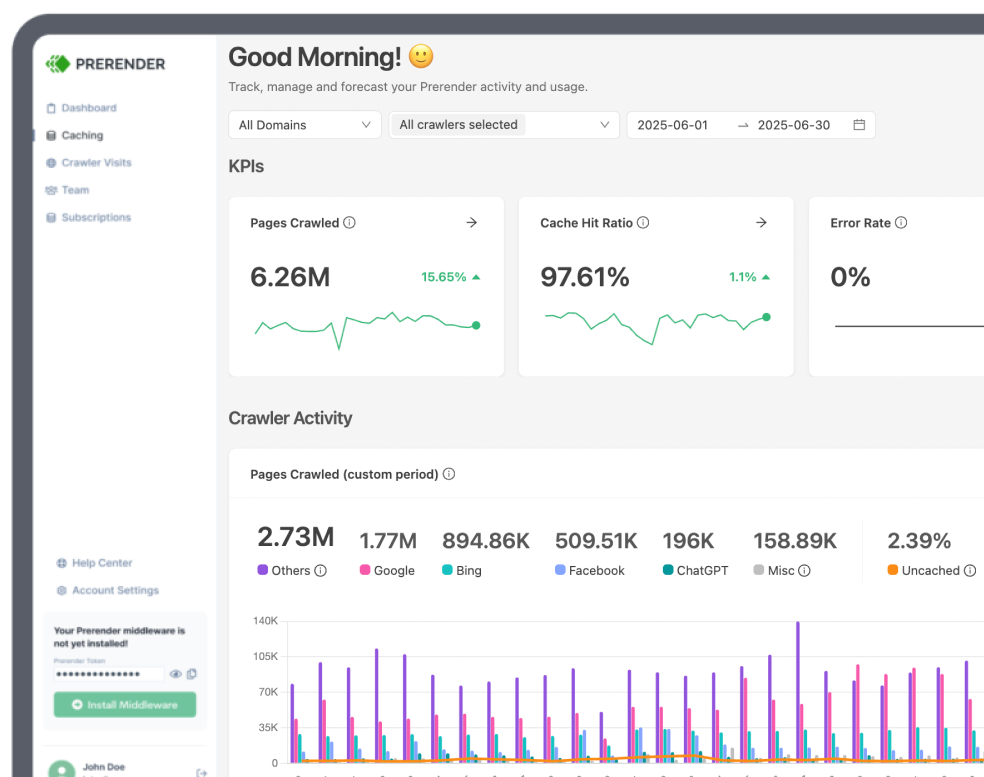
The volume of AI crawler traffic makes the access layer a pressing concern. One site on Prerender.io’s infrastructure received over 700,000 requests from GPTBot in a single 30-day period. Without prerendering, every one of those requests would have returned an unrendered document shell with no usable content.
Popken Fashion Group, Europe’s largest plus-sized fashion retailer, experienced this firsthand across its 32 JS-powered domains. Product pages that looked complete in a browser were invisible to crawlers that could not execute the JavaScript required to render them. After implementing Prerender.io, the team was forced to temporarily disable it due to an internal technical issue. Rankings dropped almost immediately across multiple markets and domains. When Prerender.io was re-enabled, visibility rebounded within a week.
In Christoph Hein, Head of SEO at Popken Fashion Group, words:
“When we reactivated Prerender.io, our domain visibility quickly started to increase within the week.”
Read Popken Fashion Group’s success story with Prerender.io.
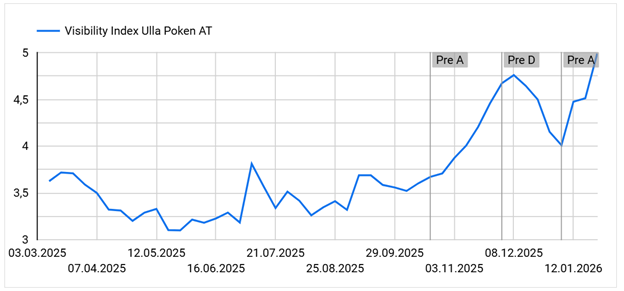
For enterprise teams running JS-heavy sites, AI search visibility is an infrastructure decision being made now, with measurable consequences when the access layer is absent. Prerender.io addresses the specific problem that content and optimization tools cannot: ensuring crawlers receive a rendered page in the first place.
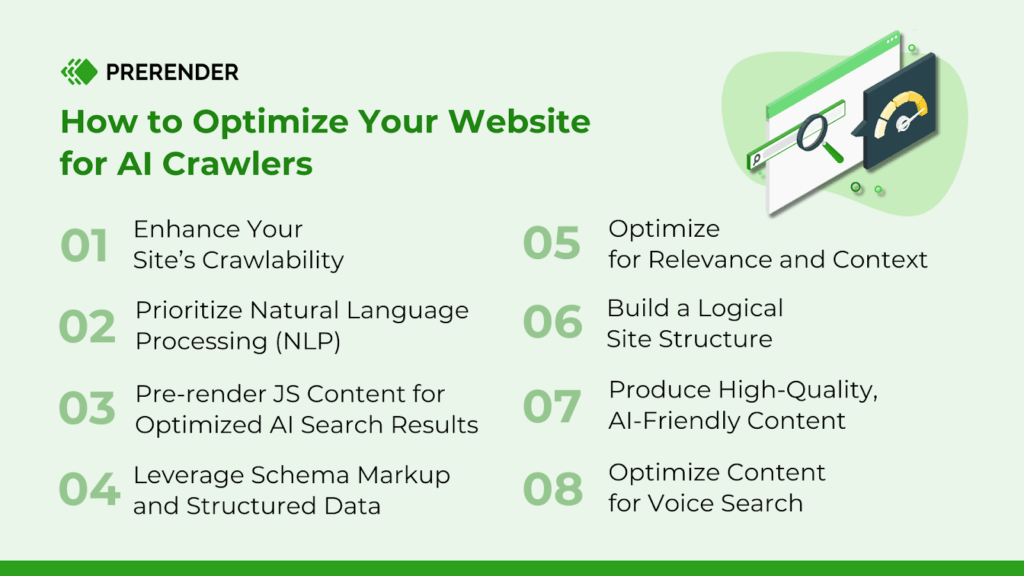
Once crawlers can access your content, the seven tactics below determine how well AI systems interpret, trust, and cite it.
7 Ways to Get Your Website Indexed and Cited by ChatGPT
Now that you understand how ChatGPT crawlers work, the next question is how to make your content discoverable and usable by AI search systems.
Below are practical AI indexing and ChatGPT optimization strategies to help ensure your website content is discovered, interpreted, and cited in ChatGPT and similar AI-driven search experiences.
1. Allow OAI-SearchBot in Your Robots.txt File
Before ChatGPT can surface your content, its crawlers need permission to access it. Just like Googlebot, AI crawlers rely on your robots.txt file to determine what they can and can’t crawl. If OAI-SearchBot is blocked, your content won’t appear in ChatGPT search results, regardless of how good it is.
As OpenAI explains in their documentation:
“OAI-SearchBot is for search. OAI-SearchBot is used to surface websites in search results in ChatGPT’s search features. Sites that are opted out of OAI-SearchBot will not be shown in ChatGPT search answers… To help ensure your site appears in search results, we recommend allowing OAI-SearchBot in your site’s robots.txt file.”
Robots.txt Best Practices for ChatGPT Indexing
Start by reviewing your robots.txt configuration to ensure AI crawlers can access your most important content:
- Allow OAI-SearchBot to crawl essential, indexable pages
- Block low-value or irrelevant sections (admin pages, internal tools, duplicates)
- Avoid blanket disallow rules that unintentionally block AI crawlers
Here are some dos and don’ts for applying robots.txt files to help you get started.
Once access is granted, focus on making your site easy for crawlers to explore and understand:
- Submit a clean, well-structured XML sitemap to guide discovery
- Fix broken links, redirect chains, and slow server responses that disrupt crawling
2. Prioritize Natural Language Processing (NLP)
AI search engines, including ChatGPT, use NLP to understand the intent behind user queries and map them to relevant content. To ensure your website’s information is accurately understood and retrieved, consider the following:
- Focus on formatting. Structure your content in a way that aligns with common search queries.
- Talk naturally. Incorporate synonyms and everyday phrases that mirror how people naturally speak (and search).
- Prioritize scannability. Break down technical concepts into simple, digestible chunks, such as using examples, analogies, or relatable scenarios to make your content accessible.
3. Leverage Schema Markup and Structured Data
Schema markup is a type of structured data that allows you to provide ChatGPT crawlers with additional information about your site’s content. This process improves your site’s visibility and relevance in AI search results.
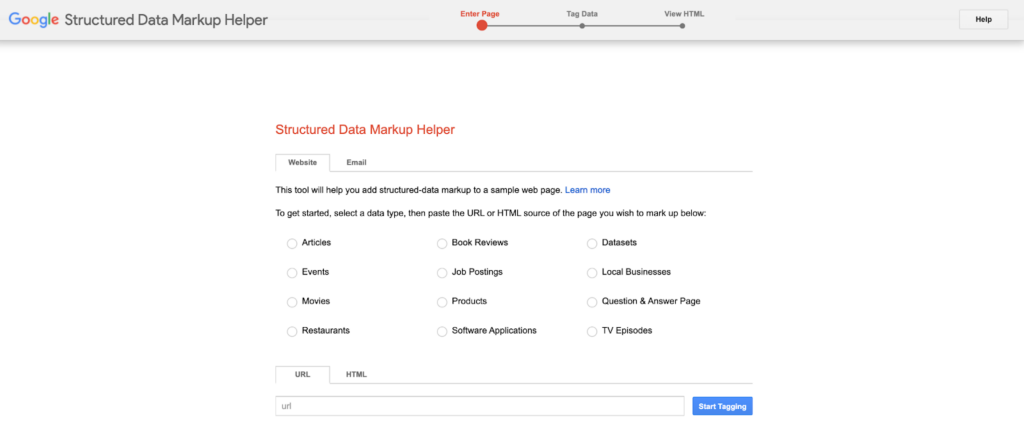
Here’s how to use schema markup effectively:
- Identify which of your content will benefit from additional information. For instance, the FAQ schema increases your chances of being featured in results on ChatGPT or Gemini.
- Then, use a tool like Google’s Structured Data Markup Helper to generate the markup code for your content.
- After adding the schema markup to your website, test it using Google’s Structured Data Testing Tool to ensure it’s working correctly.
Not familiar with schema markup? Learn 5 types of schema markup and how to implement them here.
4. Optimize for Relevance and Context
AI systems are designed to evaluate and prioritize content for its relevance to search intent. To succeed in content optimization for AI crawlers:
- Know your audience. Tailor your content to address their questions or needs.
- Provide direct, concise, and fact-based responses. That way, these can be used for snippets. Follow this content snippet’s best practices to get started.
- Keep content fresh. Regularly update your articles, blogs, and product pages to reflect the latest trends or data.
- Add links and build trust. For platforms like Perplexity that prioritize transparency, include relevant links to authoritative sources to build trust and boost your site’s visibility.
- Build entities. Cluster related content into topic hubs or silos to help crawlers associate pages on similar themes.
5. Build a Logical Site Structure
A clear and logical site structure ensures crawlers (and users) can efficiently navigate your website and interpret the relationships between different pages. Here are some strategies to achieve a healthy website structure:
- Use a logical arrangement of categories and subcategories, with clear internal linking, to guide crawlers to your important pages.
- Avoid complex menus or drop-downs, and ensure your key pages are accessible within three clicks from the homepage.
- Link key pages in the footer or main navigation to signal importance.
- Maintain a clean URL structure with descriptive, keyword-friendly slugs.
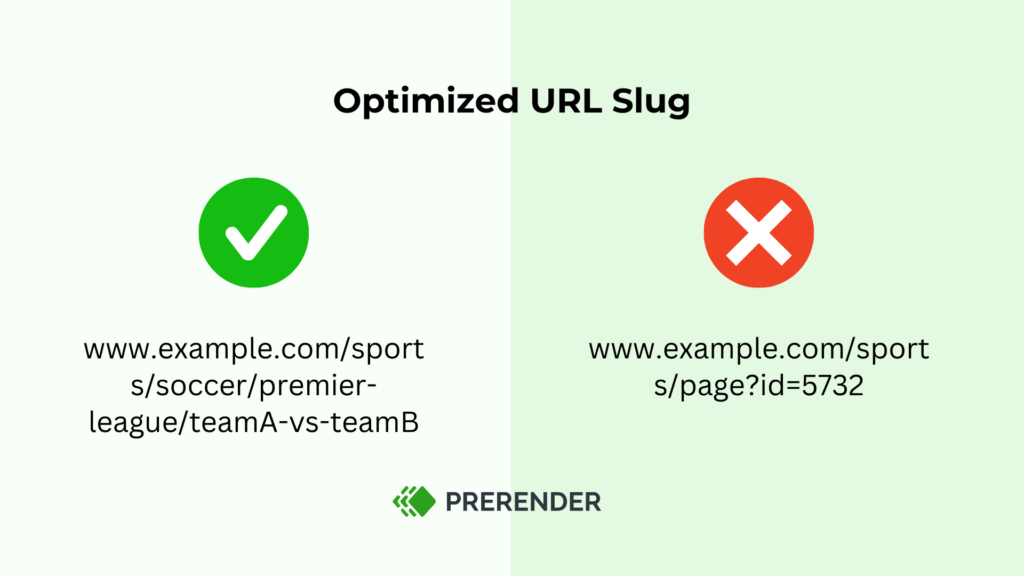
6. Produce High-Quality, AI-Friendly Content
Similar to traditional search engines, AI algorithms prioritize quality over quantity. This means creating informative and in-depth content that goes beyond simply focusing on keywords. You also need to aim for a conversational tone that engages readers and provides valuable information.
Follow these suggestions to maximize your AI content discovery efforts:
- Create content that is rich, informative, and helpful.
- Integrate alt-text for images and videos to ensure visual elements are correctly interpreted by AI crawlers and bots.
- Format your content with appropriate use of headings, subheadings, and bullet points to improve readability.
- Create well-researched and authoritative content. You can include data, statistics, case studies, and customer testimonials to back up your claims.
Related: Discover How To Make Your AI-Generated Content Indexed Faster
7. Optimize Content for Voice Search
Voice search is a rapidly growing trend, with AI assistants like Siri, Alexa, and Google Assistant leading the charge. Around 6 in 10 consumers use their voice to look up products and services and get answers to common questions.
For AI voice search optimization, you can implement the following tactics:
- Write the way people speak: clear, natural, and conversational.
- Research and incorporate long-tail keywords and questions into your content to match user queries.
- Create an FAQ section to make it easier for AI crawlers to surface your content for relevant voice queries.
- Voice search often pulls from featured snippets, so optimize your content for them.
- Use schema markup to enhance how AI search engines interpret your content.
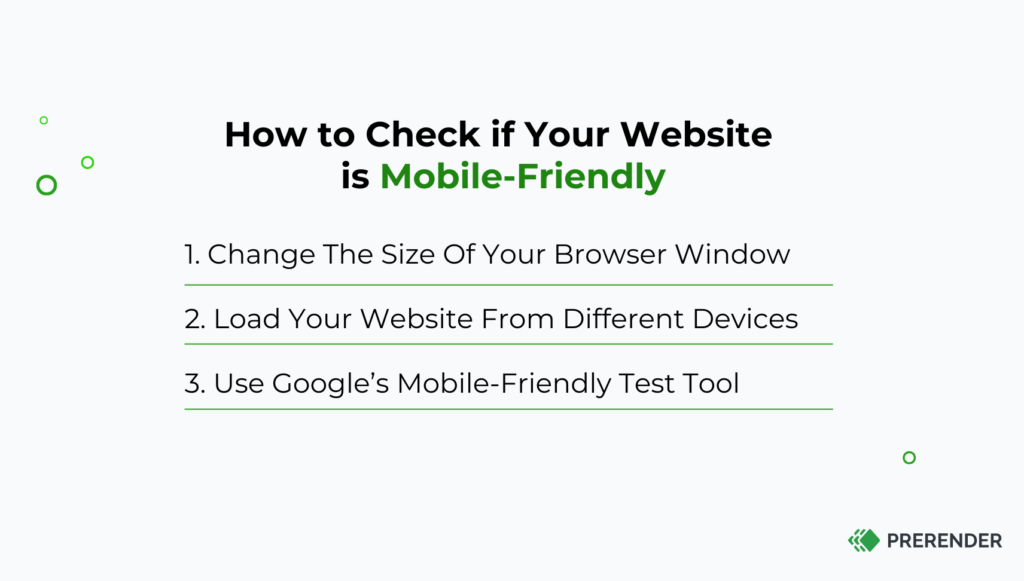
- Optimize your website for mobile devices, as this is where most voice searches primarily happen. This mobile-friendly SEO guide will tell you how.
What’s The Difference Between ChatGPT and Other AI Search Platforms? Let’s Compare
AI platforms are not one-size-fits-all. Each has a distinct way of processing, indexing, and delivering information, influenced by its algorithms and intended use cases. Below are some popular ones.
A. ChatGPT
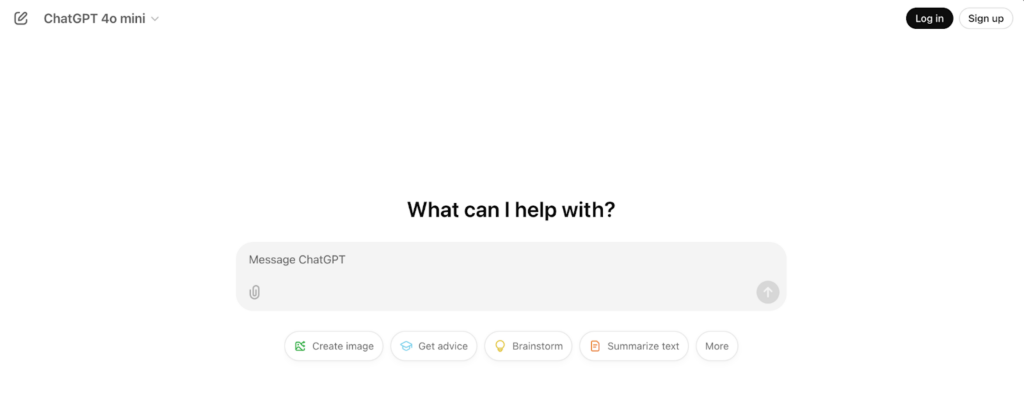
Since its introduction in 2022, ChatGPT by OpenAI has become synonymous with conversational AI. It effectively simulates natural dialogue and is trained to provide detailed responses to users’ prompts.
Offering different plans, from free to paid, ChatGPT provides a wide range of capabilities from image generation to coding applications, and is one of the most user-friendly models around.
Also, with over 3.7 billion website visits in October 2024, ChatGPT’s dominance in the generative AI space is undeniable.
B. Claude
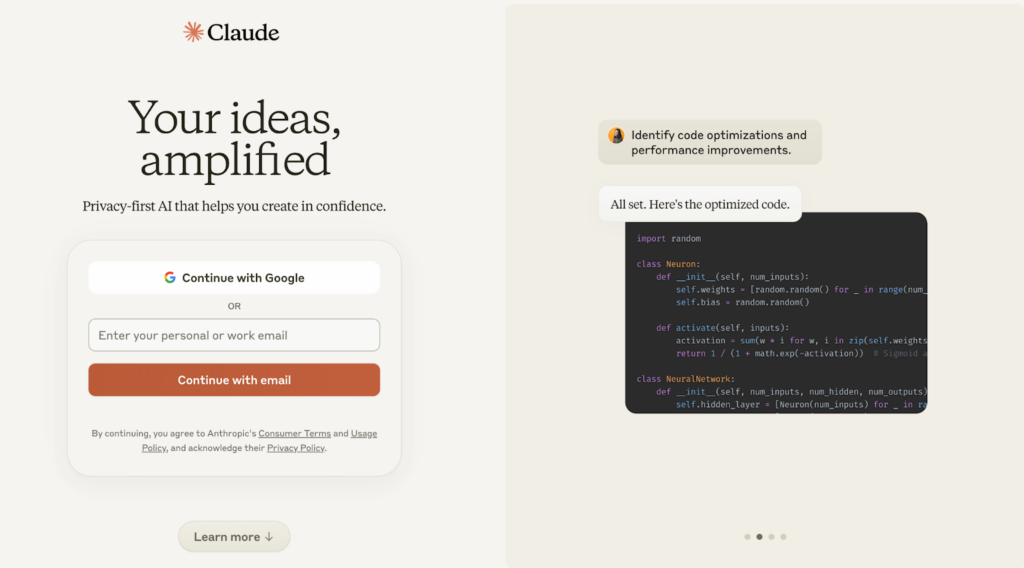
Developed by Anthropic, Claude AI emphasizes safety, reliability, and context-rich understanding. It mostly works on text-based tasks but also returns fantastic results for coding, infographics, chart creation, and more.
Claude’s strengths lie in its ability to process nuanced questions, handle extended conversations, and prioritize content that aligns with accurate information distribution.
C. Gemini
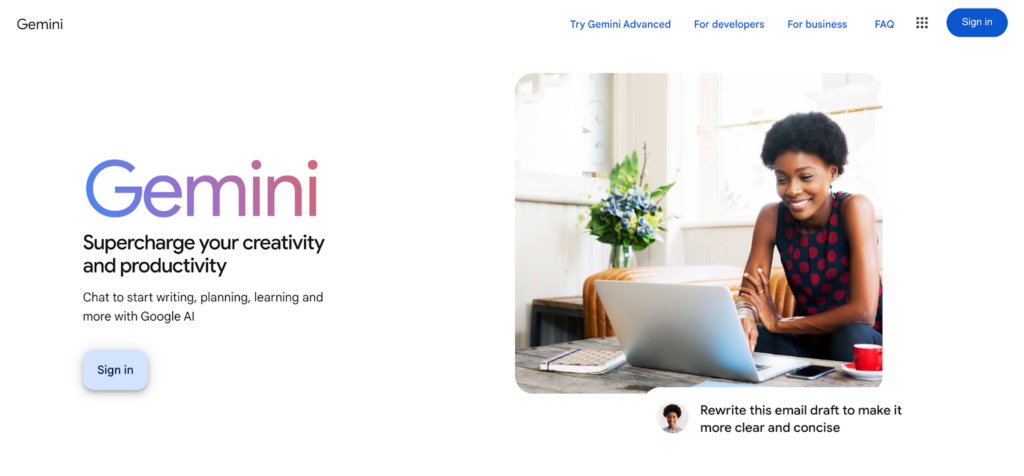
Google’s AI chatbot, Gemini (previously Bard), combines the precision of traditional search algorithms with the reasoning capabilities of AI. It is trained on Google’s large language models (LLMs): Language Model for Dialogue Applications (LaMDA) and PaLM 2. As of September 2024, the chatbot received an average of 274.7 million monthly visits.
D. Perplexity
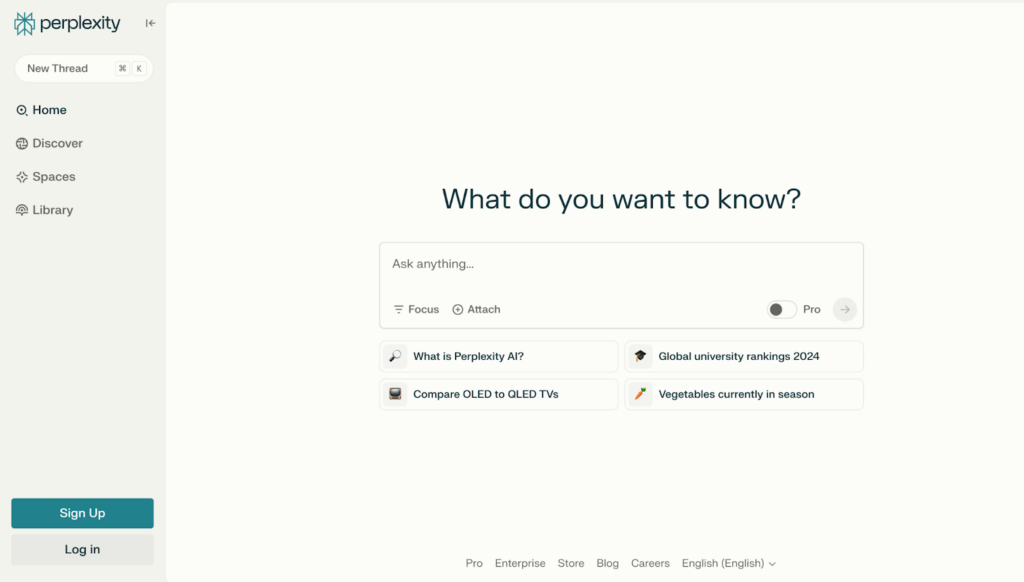
Perplexity positions itself as a research assistant-style tool that gives accessible, conversational, and verifiable answers to any question. It pulls real-time internet data and backs it up with citations from trusted sources.
Unlike other popular AI chatbots, Perplexity leverages multiple LLMs and can pull answers from Claude and ChatGPT, in addition to its proprietary models.
E. You.com
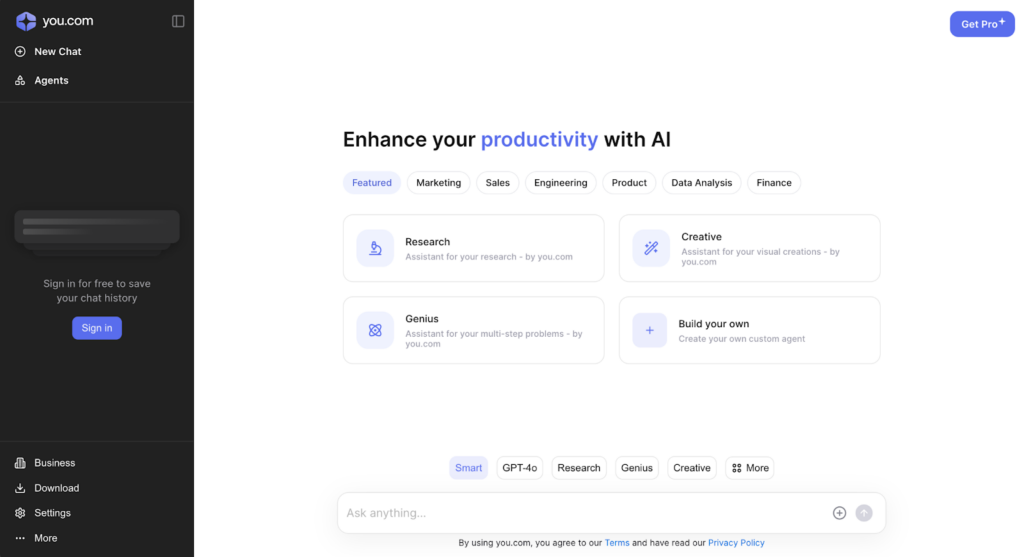
You.com is an AI-powered, ad-free AI search engine that prioritizes user privacy and delivers relevant results using natural language processing (NLP). Its user-friendly interface and customizable experiences offer users more control over their search results.
You.com’s commitment to privacy, control, and relevance makes it a top pick for users who value these attributes.
Make Your Site ChatGPT and AI-Friendly with Prerender.io
By implementing these AI indexing strategies, you can ensure your website remains visible, relevant, and discoverable by AI crawlers. With ChatGPT indexing and others leading the change, AI search is set to become even more advanced and integral to our daily lives.
While they may not entirely replace traditional search, they will complement them and enhance search capabilities. However, adapting to this new way of online searching also means ensuring your site is ready for AI search platforms.
Pre-rendering tools like Prerender.io can help optimize your website’s technical SEO quality, allowing it to get recognized by traditional and AI search engines alike. Sign up to Prerender.io for free to AI-proof your website.
Other AI-related content crawling and indexing tips that may interest you:
- Product Discovery: How Do LLMs Decide What Content to Recommend?
- How to Easily Optimize Your Website for AI Crawlers
- 6 Reasons Your AI Content Isn’t Being Indexed Faster
- Traditional Search vs. AI-Powered Search Explained
FAQs – How ChatGPT Processes and Indexes Content
How Can I Make My Website Show Up In AI Search Results?
To appear in AI search results, your site must be readable for AI systems to interpret. This includes clean structure, clear metadata, and fully visible content—including JavaScript pages. Tools like Prerender.io help by pre-rendering JavaScript into HTML that AI crawlers can reliably index, retrieve, and cite. This way, it’s far more likely to surface in ChatGPT and other AI-driven search experiences. See the details of Prerender.io for AI search.
How Can I Optimize My Website for ChatGPT, Gemini, and Other AI Search Engines?
Optimizing for AI search goes beyond traditional SEO. Focus on:
- Rendering: Make JavaScript content visible with Prerender.io.
- Schema: Add structured data (FAQ, Article, Organization).
- Language: Use conversational phrasing and question-based headings.
- Structure: Build internal links and topic clusters around core queries.
- Freshness: Update and republish content regularly.
Can ChatGPT Read JavaScript Websites?
Not reliably. ChatGPT and other AI search engines can struggle to fully read JavaScript-built websites, especially when important content loads client-side. If AI crawlers can’t access that content, it won’t be retrieved in AI search results. Pre-rendering JavaScript into clean HTML helps ensure AI systems can consistently read, index, and surface your content in AI-driven search experiences.
What Is the Fastest Way to Get Indexed by AI Search Engines?
The quickest way to get indexed by AI search engines is to ensure your content is fully crawlable, structured, and accessible. This includes having clean HTML, using schema markup, providing sitemaps, and prerendering your JavaScript content. Tools like Prerender.io help by pre-rendering your pages, making them instantly readable and indexable by AI systems.
How Does Prerender.io Help My Website Get Indexed by ChatGPT Bot?
Prerender.io helps your site get indexed by the ChatGPT bot by generating 100% indexed-ready versions of your pages. If your website uses JavaScript-heavy frameworks, some content may not be visible to AI crawlers. With Prerender.io, all content—including dynamic content—is made accessible to AI bots, improving your chances of accurate indexing and discoverability in AI-driven search results. Learn more.
What Role Does Schema Markup Play in AI Search Visibility?
Schema markup gives AI systems context about your content. Implementing FAQ, Article, and Product schema helps ChatGPT and Gemini understand what your pages mean (not just what they say), increasing your chances of being cited or summarized in AI responses.
Where Can I Learn More About AI Search and Website Indexing?
Tune into Get Discovered: Prerender.io’s podcast exploring AI, search, and online visibility. You can also check out our AI Indexing Benchmark Report for Ecommerce to better understand the impact of LLMs on various industries.