The rapid rise of AI has pushed marketers and SEO teams from startups to enterprise companies to make their websites more AI-friendly as part of broader AI search optimization efforts. But AI’s role in search has evolved. It’s no longer limited to understanding, extracting, and presenting content.
Today, AI systems are beginning to execute tasks on behalf of users, such as comparing options, signing up for a service, or completing a purchase. This shift demands a more advanced approach to website optimization. The question is no longer whether AI can see and read your content, but whether it can trust your site enough to act on it.
In this guide, we’ll discuss the characteristics and differences between “AI-friendly” and “AI-agent-friendly” websites, show real-world examples across industries, and explain how to position your site for this next evolution of web standards with a future-proof website strategy.
TL;DR: How AI-Friendly and AI-Agent Friendly Websites Differ
If you strip this topic to its essentials, the distinction comes down to AI comprehension vs. AI recommendation—and ultimately, execution:
- AI-friendly websites are designed to be understood by AI systems. They rely on clean content structure, schema markup, structured data, crawlability, and properly rendered, machine-readable content.
- AI-agent friendly websites are designed to be used autonomously and acted upon by AI systems. This includes APIs, structured endpoints, predictable interactions, and secure authentication that support autonomous agent navigation.
Many websites today fall somewhere in between—but lean heavily toward AI-friendly at best. Very few are intentionally designed for agent interactions or autonomous workflows that power modern AI recommendation engines.
What is an AI-Friendly Website?
An AI-friendly website is one that AI systems can reliably discover through crawling, render without errors, parse into structured meaning, and interpret consistently across time. It’s similar to being “SEO-friendly,” but with a stronger emphasis on machine-readable content and AI interpretation rather than keyword rankings alone.
These websites excel at appearing in search results, AI-generated summaries, and knowledge bases. So when someone asks AI about your product category or topic, an AI-friendly design improves the chances of your content being surfaced and correctly represented.
Core Characteristics of an AI-Friendly Website
If your website meets the following criteria, it’s well-positioned for AI search optimization and AI-based discovery.
1. Content Clarity and Structure
Well-written, logically organized information with proper heading hierarchy (H1, H2, H3) and scannable content that makes your key points obvious.
2. Optimized Metadata and Schema Markup
Metadata tells AI systems what your page is about. Schema markup tells them how content elements relate to each other. Product schema, FAQ schema, article schema, OG tags, and organization schema all help AI systems place your brand within the correct context.
3. Rendered Content
Many AI crawlers have limited JavaScript execution capabilities. Ensuring content accessibility—whether through server-side rendering, static generation, or dynamic rendering solutions—helps guarantee that AI systems can extract and use your content.
4. Semantic HTML
Proper use of <article>, <section>, <nav>, and <aside> give AI systems clear signals about content purpose and relationships.
Resource: Learn how to get your website indexed by AI search engines
What is an AI-Agent Friendly Website?
An AI-agent-friendly website is built to support autonomous agent navigation, interaction, authentication, and task execution.
Instead of just reading your content, AI agents become traffic sources, making decisions, comparing options, booking appointments, and completing tasks with minimal human intervention.
Core Characteristics of an AI-Agent Friendly Website
The following signals whether your website is AI-agent friendly.
1. Programmatic Access
APIs, webhooks, and machine-readable endpoints enable agents to interact with your functionality directly. This includes proper authentication systems to ensure security and verify legitimate agent access.
2. Clear Action Pathways
Direct navigation and transaction flows with predictable UI patterns that agents can reliably follow and complete.
3. Simplified Interactions
Streamlined checkout processes, reduced form fields, and guest options reduce friction for AI-initiated transactions.
4. Confirmation Mechanisms
Machine-readable receipts, transaction IDs, status tracking, and structured error messages help agents verify completion or retry requests.
AI-Friendly vs. AI-Agent Friendly: Key Differences
Both website types serve different purposes and demand different technical approaches. Below is a comparison across the key areas.
| Area | AI-Friendly Websites | AI-Agent Friendly Websites |
|---|---|---|
| Main goal | Help AI understand what your site offers | Help AI complete what users want (e.g., buying a product) |
| Core function | Information extraction and comprehension | Task execution and transaction completion |
| Operation type | Read-only (GET requests) | Read-write (POST, PUT, DELETE requests) |
| Technical focus | Structured content, clarity, semantic markup, rendering | APIs, documented endpoints, transaction workflows, authentication |
| Funnel position | Top-of-funnel (awareness, research) | Button-of-funnel (decision, action) |
| User journey | AI extracts and presents information elsewhere (LLM summaries, answers) | AI executes tasks directly on your platform (purchase, reservation, account change) |
| Success metrics | Visibility, search impressions, accurate representation in AI responses | Task completion rate, successful transactions, conversion rate, authentication success |
| Example sites | Blogs, news, content hubs | Ecommerce stores, booking platforms, SaaS applications |
| Business impact | Discoverability and brand awareness | Conversion and revenue generation |
Real-World Examples of Both AI-Optimized Website Types
If you wonder what the differences are between an AI-friendly and an AI agent-friendly website in the real world, here are examples of industries already operating in these two categories.
Examples of AI-Friendly Websites
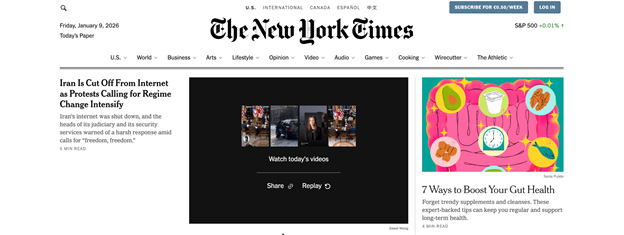
- Media and content sites like The New York Times or BBC News lead because they use structured article markup (publish dates, bylines, categories) and maintain a logical content hierarchy with consistent topic tagging. That clarity makes them frequent inclusions in AI news summaries and trusted sources for retrieval.
- Educational platforms like Wikipedia and Khan Academy take a similar approach through structured and factual content supported by internal linking and clean categorization. Their predictable format makes them easy for AI systems to parse and cite.
Examples of AI-Agent Friendly Websites

- Ecommerce platforms like Shopify stores (with proper API implementation) and Amazon enable agent interaction through robust APIs for product search, cart, and checkout flows. Their structured product data—SKUs, pricing, inventory—gives AI recommendation engines reliable information (positioning them for autonomous purchasing as adoption grows).
- SaaS platforms like Stripe and Zapier were built for automation, offering extensive API docs, webhooks for real-time events, and clear authentication flows. AI agents can configure services, trigger tasks, and manage accounts with little friction.
- Travel and booking platforms are more agent-friendly by necessity. Since bookings are structured tasks, availability is time-sensitive, and APIs are common, AI agents perform well here.
How to Make Your Website AI and AI-Agent Friendly
Phase 1 – The Foundation: AI-Friendly Analysis and Optimization
Before you can think about AI agents taking actions on your site, you need to audit your current state. This starts with a simple diagnostic assessment:
- Run your important pages through AI crawlers like ChatGPT’s browsing mode or Perplexity, and evaluate the summaries they generate
- Use Google’s Rich Results Test to evaluate your structured data
- Check your site with various AI-powered search tools to see how you’re represented
Once you’ve identified the gaps, content optimization becomes your priority:
- Aim for clear, concise content with purpose
- Use descriptive headings that make sense on their own
- Implement comprehensive Schema.org markup for your organization, products, articles, and FAQs
- Ensure your content hierarchy is logical and scannable
With content in a better place, turn your attention to your technical structure:
- Use clean, semantic HTML to help AI systems parse your pages reliably
- Fix accessibility issues and ensure both humans and AI can read your content
- Optimize your site speed and Core Web Vitals, as performance influences how AI systems evaluate and prioritize websites
- Finally, ensure your meta tags are fully completed and consistent, using JSON-LD for structured data wherever possible
At this stage, the goal is simply ensuring your website is easy to access, understand, summarize, and trust. That’s the baseline for everything that comes next.
Phase 2 – The Transformation: Layer in AI-Agent Capabilities
Once your foundation is solid, begin developing agent-friendly features. However, you’ll need to approach this strategically based on your business model, resources, and timeline.
The first step is your API development:
- Start with read-only APIs that expose your product catalog or service availability
- Then, expand to transactional APIs that support cart operations, bookings, and checkout processes
- Document these endpoints thoroughly using OpenAPI standards
- Provide sandbox environments for safe testing without affecting live data
Afterwards, your API infrastructure must include:
- Robust authentication systems (OAuth 2.0, API keys, etc.) to verify legitimate AI agents
- Rate limiting to prevent abuse and manage server load
- Request validation and input sanitization
- Clear terms of service for programmatic access
- Audit logging to track all agent interactions
- Compliance with data privacy regulations (GDPR, CCPA, etc.)
As you build on these capabilities, simplify your conversion flows too:
- Reduce form fields to the absolute minimum required
- Offer guest checkout options wherever possible
- Use predictable field names that AI systems can recognize and autofill reliably (e.g., “email” not “email_address_field”)
- Also consider a single-page checkout experience to reduce the risk of navigation errors or abandoned workflows
Then, add natural language interfaces where appropriate:
- Implement intelligent search that understands natural language queries
- Deploy chatbots that can trigger backend actions, such as checking availability or initiating orders
- For relevant markets, support voice-enabled interactions to further reduce friction
Finally, close the loop by creating machine-readable content (confirmations) for every transaction:
- Structure success pages with clear data
- Send email confirmations that include JSON-LD markup for easy parsing
- Provide status-tracking APIs that allow agents to follow up on orders or bookings automatically
And when things go wrong—as they will sometimes—create clear, actionable error messages that specify what went wrong and how to fix it.
How Prerendering With Prerender.io Fixes Your AI Visibility Issues

Now, all of these optimizations above assume AI systems can already see your content in the first place. However, roughly 97% of modern websites rely heavily on JavaScript frameworks to deliver fast, interactive experiences.
While excellent for performance, they create rendering challenges for agents and crawlers that lack full JS execution capabilities. This means that when an AI bot visits your site, it may encounter a blank page, making your site invisible to AI systems regardless of how well you’ve optimized your content.
Thankfully, this is exactly the problem Prerender.io is designed to solve.
Prerender.io uses dynamic rendering to serve fully rendered HTML to AI bots and crawlers, while still delivering your JavaScript-powered experience to human users. In other words, AI systems get the same complete page a user would see, without needing to execute JavaScript themselves.
This process, together with the foundational optimizations above, transforms your site into an AI-friendly website with accurate comprehension and representation in LLM-generated answers.
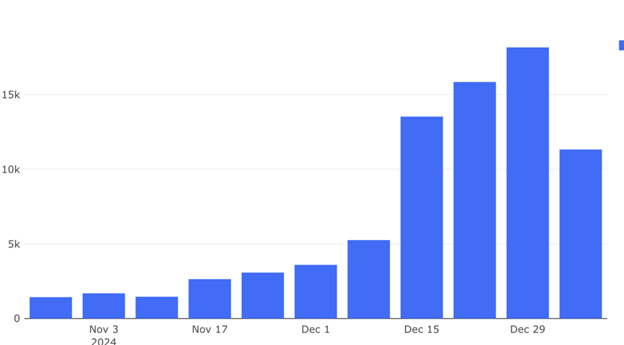
For example, one happy Prerender.io user saw measurable traffic improvements within 30 days of adding ChatGPT user agent to their configuration. Read more clients’ success stories here.
Beyond visibility, Prerender.io also creates a stable environment for AI systems—consistent rendering for programmatic access, faster load times, and reliable content structure for AI parsing.
This comprehensive approach to AI search optimization ensures that your content is not only visible but also properly understood and actionable by AI agents. Learn more about Prerender.io’s processes and benefits.
And the best part is our dynamic rendering tool is plug-and-play, so there’s no need for you to change your tech stack. Simply install Prerender.io and experience the impact it brings to your site.
Start Optimizing Your Website for the Next AI Web Evolution
The transition to AI agent-friendly websites is happening gradually. While the technology exists today for AI systems to navigate, widespread user adoption is still building.
However, as users become more comfortable delegating tasks to AI assistants and as AI systems prove their reliability, we’ll see a gradual shift toward greater autonomy. Businesses that don’t compromise on human experience and build the right (AI) infrastructure now will be positioned to capture this traffic as it scales.
But the first step towards a future-proof website strategy is ensuring your content is visible to crawlers by using Prerender.io to eliminate the technical barriers that prevent AI crawlers from accessing JS-heavy sites. With this foundation in place and a strategic roadmap, your site will be ready for the next evolution of web standards.
Try Prerender.io today! Sign up for a free 30-day trial.
FAQs – AI-Friendly and AI-Agent Friendly Websites
1. Do I Need to Optimize My Website for Both AI-Friendly and AI-Agent Friendly?
It depends on your business model. All sites should start with AI-friendly optimization, so AI systems can find and accurately present your content. For publishers and blogs, that may be enough. However, if you’re an ecommerce platform, SaaS application, or the like where conversions matter, you’ll eventually need agent-friendly capabilities.
2. What Is the Difference Between AI Agents and AI Assistants?
AI assistants complete tasks with human guidance—answering questions, suggesting actions, or managing workflows when prompted (e.g., Siri, Alexa, Google Assistant, etc.). While AI agents act more autonomously. They can initiate actions, interact with services through APIs, and complete multi-step tasks with little to no human supervision.
3. Is It Safe to Let AI Agents Interact With My Website Through APIs?
Yes, it is safe to have AI agents interact with your website through APIs as long as you implement proper safeguards. The same security practices that protect human users—authentication, permissions, rate limits, and monitoring—apply to AI agents. With clear access controls, API-based interaction can be secure and auditable.
4. How Does Prerender.io Improve AI Search Visibility?
Prerender.io is a prerendering solution that converts JavaScript pages into crawlable HTML, making your content accessible for AI agents and crawlers. This ensures that your website can be found and accurately represented across all AI search platforms. Learn more about how Prerender.io boosts your AI search visibility.